Table of Contents
ToggleHow Local Retail Brands Can Use Retention Marketing to Increase Repeat Customers
Retention marketing is becoming essential for local retail brands that want customers to come back after their first purchase. Imagine a customer visiting a local fashion store, buying one outfit, and then never hearing from the brand again. The store may have earned one sale, but it lost the chance to build a long-term customer relationship.
This is where email marketing automation can make a real difference.
For many local retailers, the main focus is usually on getting new customers through ads, discounts, walk-ins, social media, and word of mouth. While new customer acquisition is important, repeat customers are often more valuable because they already trust the brand. They are more likely to buy again, try new products, refer others, and engage with seasonal offers.
Email automation helps retail brands stay connected with these customers without having to manually send every message. A beauty store can send refill reminders. A grocery brand can share monthly offers. A home decor shop can promote festive collections. A local D2C brand can send product recommendations based on past purchases.
For small businesses, this creates a simple but powerful opportunity: use customer data to send timely, relevant, and useful emails that bring people back to shop again.
What Is Retention Marketing for Local Retail Brands?
Retention marketing focuses on existing customers and encourages them to make repeat purchases. Instead of only spending money to attract new buyers, local retail brands use retention strategies to stay connected with people who have already purchased, visited the store, subscribed online, or shown interest in their products.
For a local retail business, retention marketing can include welcome emails, thank-you messages, birthday offers, festive discounts, loyalty rewards, product recommendations, and win-back campaigns. These messages remind customers about the brand and give them a reason to return.
Retention Marketing in Simple Terms
In simple terms, retention marketing is about building stronger relationships with existing customers. It is not only about selling again. It is about staying useful, relevant, and visible after the first purchase.
For example, a local clothing store can send styling ideas after a purchase. A cafe can send weekend offers to regular customers. A beauty store can remind customers when it’s time to repurchase their skincare products. These small but timely messages help turn one-time buyers into repeat customers.
Why It Matters for Offline and Online Retail
Today, many local retailers sell through both physical stores and online channels. A customer may discover the store on Instagram, visit the shop, buy online later, and then return during a festive sale. Retention marketing helps connect all these customer touchpoints.
When done properly, it helps local retail brands improve repeat sales, increase customer loyalty, and grow revenue without depending only on new customer acquisition.
Why Repeat Customers Matter More Than One-Time Buyers
For local retail brands, repeat customers are highly valuable because they already know the brand. They have purchased before, experienced the product or service, and are more likely to trust future offers.
Getting a new customer usually requires more effort. Retailers may need to spend on ads, discounts, influencer campaigns, flyers, store promotions, or social media marketing. But with existing customers, the brand already has a relationship to build on.
Repeat Customers Already Trust the Brand
Trust is one of the biggest challenges in local business marketing. When someone buys from a store once and has a good experience, the next purchase becomes easier. The customer does not need to be convinced again from the beginning.
For example, if a customer buys a dress from a boutique and likes the quality, they may be interested in new arrivals, festive collections, or styling suggestions. A simple email at the right time can bring that customer back.
Repeat Purchases Improve Revenue Stability
One-time buyers can create short-term sales. Repeat customers create more stable revenue. They help retailers build predictable sales from people who already have an interest in the brand.
This is especially useful for small businesses that cannot always spend heavily on advertising. A strong retention marketing system helps them generate sales from their existing customer base while continuing to attract new buyers.
How Email Marketing Automation Helps Increase Repeat Purchases
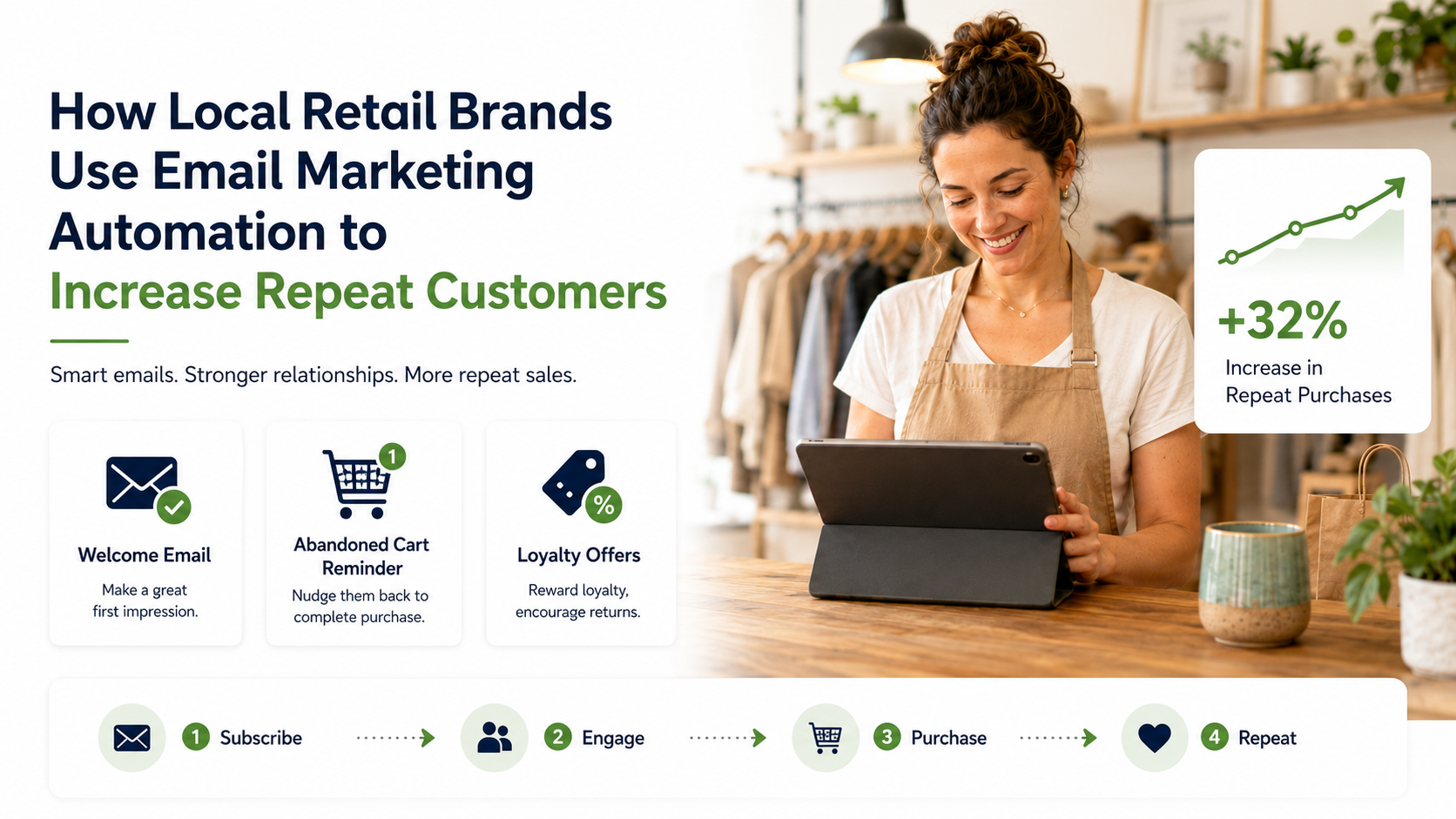
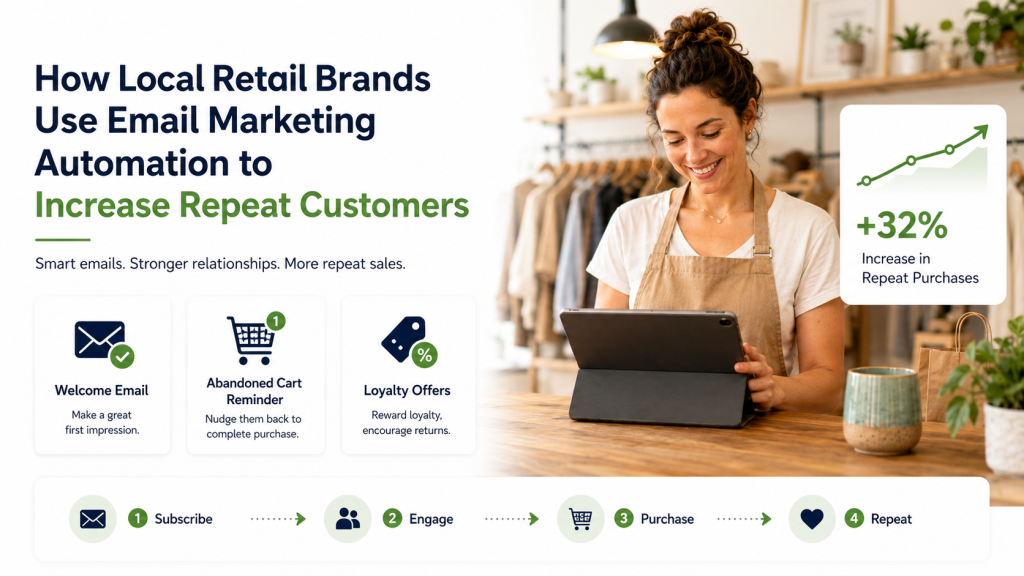
Email marketing automation allows retail brands to send automatic emails based on customer actions, interests, or purchase history. Instead of manually sending every message, the business can set up email flows that run in the background.
For example, when someone signs up for a store newsletter, they can receive a welcome email. When someone adds a product to their cart but does not buy, they can receive an abandoned cart reminder. When someone buys skincare products, they can receive a refill reminder after a few weeks.
What Email Marketing Automation Does
Email marketing automation helps retailers communicate with customers at the right time. It can be used to welcome new customers, remind them about products, recommend related items, ask for reviews, announce new arrivals, and bring back inactive customers.
This is useful because customers may forget about a store after their first visit. Automated emails keep the brand visible without being too pushy.
Why Automation Is Useful for Small Retail Teams
Many local retail brands do not have large marketing teams. The owner or a small team may already be managing sales, inventory, customer service, social media, and store operations.
Email marketing automation reduces manual work. Once the flows are created, they can continue sending relevant emails automatically. This helps small teams save time and maintain regular customer communication.
How It Supports Better Customer Experience
Good automation is not only about sending offers. It can also improve the customer experience. For example, a post-purchase email can thank the customer, share product care tips, and suggest useful next steps.
When emails feel helpful and relevant, customers are more likely to open, click, and buy again.
Important Email Automation Flows for Local Retail Brands
Local retail brands can start with simple email automation flows and improve them over time. The goal is not to send too many emails. The goal is to send the right emails at the right stage of the customer journey.
Welcome Email Flow
A welcome email flow is sent when someone signs up, creates an account, or makes their first purchase. It introduces the brand, shares what the customer can expect, and may include a first-time offer.
For example, a home decor store can welcome new subscribers and show its best-selling products. A beauty brand can introduce its product categories and guide customers to choose based on skin type.
Abandoned Cart and Browse Reminder Emails
Abandoned cart emails are useful for e-commerce email marketing because many customers add products to their cart but do not complete the purchase. A reminder email can bring them back.
Browse reminder emails can also help. If a customer viewed a product but did not add it to the cart, the brand can send a gentle reminder or show similar products.
Post-Purchase Email Flow
Post-purchase emails are sent after a customer purchases an item. These emails can include thank-you messages, delivery updates, product usage tips, review requests, and related product suggestions.
For example, a fashion store can send styling ideas based on the purchased item. A grocery brand can recommend complementary products. A beauty store can send usage instructions and refill reminders.
Win-Back Email Flow
A win-back email flow is used for inactive customers. If a customer has not purchased in a long time, the brand can send a special offer, a new arrival update, or a reminder.
For example, a cafe can send a “We miss you” offer. A boutique can share its latest festive collection. A D2C brand can offer a limited-time discount to encourage another purchase.
Birthday, Festive, Loyalty, and Product Recommendation Emails
Birthday and festive emails work well for local retailers because customers are often open to shopping during special occasions. Loyalty emails can reward regular buyers and encourage future purchases.
Product recommendation emails are also useful. They can be based on previous purchases, product categories, browsing behavior, or customer preferences.
Together, these flows help local retail brands build stronger relationships and increase repeat customers.
How E-commerce Email Marketing Supports Offline and Online Repeat Sales
E-commerce email marketing is not only useful for online stores. It can also support physical retail stores. Many customers now interact with local brands through multiple channels, including websites, social media, WhatsApp, marketplaces, and offline stores.
Email helps connect these channels.
Connecting Store Purchases With Online Customer Data
When local retailers collect customer emails during billing, online orders, loyalty signups, or event registrations, they can build a useful customer database. This data can then be used for personalized email campaigns.
For example, if a customer frequently buys ethnic wear from a local boutique, the store can send emails about festive collections, new arrivals, or styling ideas.
Bringing Customers Back to the Store
Email can also drive offline visits. A local retailer can send emails about weekend offers, in-store events, seasonal discounts, new product launches, or exclusive loyalty benefits.
This works especially well for fashion stores, grocery stores, cafes, salons, electronics stores, beauty stores, and home decor shops.
Promoting Online Offers and Seasonal Campaigns
For retailers with e-commerce websites, email marketing can promote online offers, sale events, product bundles, and cart reminders. It helps convert existing customer interest into repeat sales.
This makes e-commerce email marketing a strong part of both online and offline retail growth.
How to Use Customer Data, CRM, and Segmentation for Better Retention
Customer data plays an important role in retention marketing. Without segmentation, many brands send the same email to every customer. This often reduces engagement because not every customer shares the same interests, needs, or buying stage.
Segmenting Customers by Purchase History
Retailers can segment customers based on what they purchased, when they purchased, and how often they buy. For example, a beauty store can create separate segments for skincare, haircare, and makeup buyers, as well as inactive customers.
This helps the brand send more relevant emails.
Creating Personalized Offers Based on Interest
Personalization does not always need to be complicated. Even basic personalization can work well. A fashion store can send ethnic wear offers to customers who bought sarees or kurtas. A grocery brand can send monthly household offers to regular customers.
This makes retail digital marketing more customer-focused and less generic.
Using CRM Data for Better Campaigns
A CRM helps retailers store customer information, purchase history, preferences, and engagement data. When this data is integrated with email automation, the brand can create more effective campaigns.
For example, retailers can target new, repeat, inactive, high-value, location-based, and product-category-based customers with different messages.
Best Practices for Local Retail Email Marketing Automation
Email marketing automation works best when emails are simple, relevant, and easy to act on. Customers should understand the message quickly and know what to do next.
Keep Email Content Simple and Useful
Local retailers should avoid making emails too long or confusing. A good email usually includes a clear subject line, a short message, a product image, offer details, and a direct CTA.
For example: Shop New Arrivals,Claim Your Offer,Explore Festive Collection,Buy Again,Visit the Store This Weekend
Avoid Sending Too Many Promotional Emails
Sending too many emails can irritate customers. Retailers should maintain a good balance between promotional and helpful emails.
For example, instead of only sending discounts, a beauty store can share skincare tips. A fashion store can share styling ideas. A home decor brand can share room setup inspiration.
Make Emails Mobile-Friendly
Most customers check emails on mobile. So, emails should be easy to read on small screens. Use short paragraphs, clear images, visible buttons, and simple layouts.
A mobile-friendly design improves clicks and conversions, especially for local retailers targeting busy customers.
Common Mistakes Retail Brands Should Avoid
Many retail brands start email marketing but do not get strong results because they use it only as a promotional tool. Retention marketing needs consistency, relevance, and proper tracking.
Sending the Same Email to Every Customer
One common mistake is sending the same message to everyone. A first-time buyer, loyal customer, inactive customer, and high-value customer should not always receive the same email.
Better segmentation improves the customer experience and increases the chances of repeat purchases.
Not Tracking Repeat Purchase Data
Some brands only track open rates or clicks. These are useful, but they do not show the complete picture. Retailers should also track repeat purchase rate, revenue from email, conversion rate, and customer lifetime value.
This helps them understand whether email campaigns are actually bringing customers back.
Ignoring Inactive Customers
Inactive customers are often missed. But many of them may still be interested if they receive the right message. A win-back campaign with a relevant offer or product update can help bring them back.
Tools That Can Help Retail Brands Automate Email Marketing
Retailers can use different tools to manage email marketing automation, customer segmentation, and reporting. The right tool depends on business size, ecommerce platform, customer database, and marketing goals.
Email Automation Platforms
Tools like Mailchimp, Klaviyo, Zoho Campaigns, HubSpot, and Shopify Email can help businesses create automated email campaigns. These platforms allow retailers to set up welcome emails, cart reminders, product recommendations, and win-back flows.
CRM and Ecommerce Integrations
CRM and ecommerce integrations help connect customer data with marketing campaigns. For example, when a customer buys a product online, the email platform can automatically add them to a post-purchase flow.
This makes retail digital marketing more organized and measurable.
Analytics and Reporting Tools
Retailers should also use analytics tools to track performance. Reports can show open rates, click-through rates, email sales, repeat purchases, and customer engagement.
This helps brands improve their campaigns over time rather than guessing what works.
How to Measure Retention Marketing Success
To understand whether retention marketing is working, local retail brands need to track the right metrics. Open rates are useful, but they are not enough.
Repeat Purchase Rate
Repeat purchase rate shows how many customers come back to make a purchase. This is one of the most important metrics for retention marketing.
If the repeat purchase rate improves after setting up email automation, it means the campaigns are helping bring customers back.
Open Rate, Click Rate, and Conversion Rate
Open rate shows how many people opened the email. Click rate shows how many clicked on a link or button. Conversion rate shows how many completed the desired action, such as buying a product or claiming an offer.
Together, these metrics help retailers understand customer interest and campaign performance.
Customer Lifetime Value and Revenue From Email
Customer lifetime value shows how much revenue a customer brings over time. Revenue from email shows how much sales are generated through email campaigns.
These metrics are important because the real goal is not just sending emails. The goal is to increase repeat sales and long-term customer value.
Final Thoughts: Turning One-Time Buyers Into Loyal Customers
Local retail brands should not depend only on new customers. New customer acquisition is important, but long-term growth comes from building relationships with people who already know and trust the brand.
Retention marketing helps local retailers stay connected with existing customers, encourage repeat purchases, and improve customer loyalty. With email marketing automation, brands can send timely, relevant messages without having to do everything manually.
Even simple flows like welcome emails, abandoned cart reminders, post-purchase emails, birthday offers, loyalty emails, and win-back campaigns can make a strong difference.
For local retailers, small ecommerce stores, and D2C brands, this is a practical way to grow repeat sales and build stronger customer relationships.
Conclusion
For local retail brands, retention marketing helps turn one-time buyers into repeat customers. With email marketing automation, retailers can send timely messages such as welcome emails, abandoned cart reminders, post-purchase emails, festive offers, and win-back campaigns.
Ecommerce email marketing also helps connect offline and online customer journeys, making it easier to bring customers back and increase repeat sales. Instead of depending only on new customers, local brands can use customer data, segmentation, and personalized emails to build stronger relationships.
With the right retail digital marketing approach, even small businesses can improve customer loyalty, save time, and grow long-term revenue.
FAQs
Retention marketing is a strategy focused on bringing existing customers back to buy again, rather than only trying to attract new customers. For local retail brands, it includes email campaigns, loyalty offers, product recommendations, festive promotions, and personalized communication. The goal is to increase repeat purchases, improve customer loyalty, and grow long-term revenue from existing customers.
Email marketing automation helps retail businesses send the right message to customers at the right time without having to do everything manually. For example, a store can automatically send welcome emails, abandoned cart reminders, birthday offers, review requests, and win-back campaigns. This helps local retailers stay connected with customers and encourages repeat purchases.
Local retailers should start with basic email automation flows, such as welcome emails, abandoned-cart reminders, post-purchase emails, product-recommendation emails, birthday offers, festive-sale emails, loyalty emails, and win-back campaigns. These flows help brands communicate with customers based on their actions, interests, and purchase history.
Yes, email marketing is useful for small retail businesses because it is cost-effective, easy to personalize, and helpful for repeat sales. Small retailers can use email to promote offers, announce new arrivals, share festive campaigns, and bring inactive customers back. It also supports local business marketing by keeping customers engaged beyond the first purchase.
Local retailers can increase repeat customers by using retention marketing strategies such as email marketing automation, loyalty programs, personalized offers, customer segmentation, festive campaigns, and post-purchase communication. Instead of sending the same message to everyone, retailers should use customer data to send relevant offers and reminders that encourage customers to return.